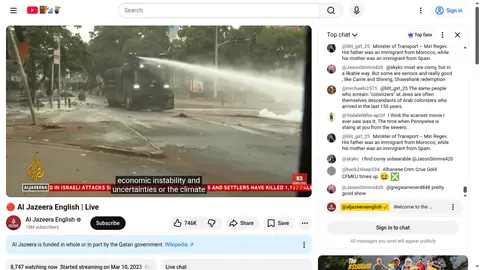
IRAN'S TOP MILITARY COMMAND SAYS STRAIT OF HORMUZ HAS BEEN CLOSED FOR PASSAGE OF ALL VESSELS
See how Al Jazeera English are framing this — we run every side, so you decide. News for humans, not bots: serious, civil discussion among real people, with the context and facts you need. Don't just watch: be on the air with your own video takes, polls and predictions.
EVERY NETWORK'S FRAMING
“THAI COURT SENTENCES TWO UIGHUR MEN TO DEATH FOR 2015 BANGKOK BOMBING THAT KILLED 20 PEOPLE”
covered 2026-06-11 ▶ Be on the air with Al Jazeera EnglishAdd your voice
This storyWhat share of global seaborne oil passes through the Strait of Hormuz?
- About 1 in 10 barrels
- About 1 in 5 barrels
- About 1 in 3 barrels
- About 1 in 2 barrels
Guess, then reveal the answer
About 1 in 5 barrels
Samir Puri served as a British diplomat in active conflict zones
Before becoming a geopolitics scholar and author, Puri worked on the ground in conflict areas including Kosovo and Pakistan. His book 'Russia's Road to War with Ukraine' drew directly on that firsthand diplomatic experience.
This storyWhat's the biggest obstacle to Lebanon's recovery?
Care workers provide essential support millions depend on daily.
Care workers assist elderly, disabled, and vulnerable people with daily living — often the first to witness gaps in social support systems. Their frontline view makes them vital voices in policy debates. Learn more at Wikipedia
Sunai Phasuk monitors human rights in Thailand for HRW.
As Human Rights Watch's Senior Thailand Researcher, Phasuk has spent decades documenting political crackdowns, military coups, and press freedom abuses in Southeast Asia — giving them rare on-the-ground insight into the region's rights landscape.
Beirut is one of the Arab world's top media and press hubs.
Lebanon's capital hosts dozens of regional broadcasters and newspapers, giving correspondents there a front-row seat to Middle East news. Explore Beirut on Wikipedia