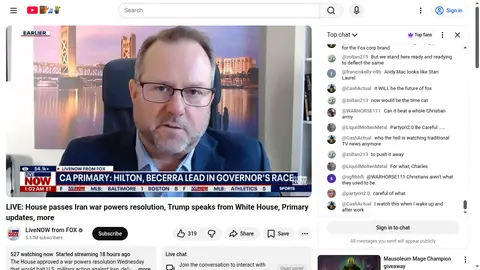
SENATE COMMITTEE HEARING ON ARTIFICIAL INTELLIGENCE IMPACT
See how LiveNOW from Fox are framing this — we run every side, so you decide. News for humans, not bots: serious, civil discussion among real people, with the context and facts you need. Don't just watch: be on the air with your own video takes, polls and predictions.
EVERY NETWORK'S FRAMING
“SENATE COMMITTEE HEARING ON ARTIFICIAL INTELLIGENCE IMPACT”
covered 2026-06-11 ▶ Be on the air with LiveNOW from FoxAdd your voice
The U.S. Senate went 7 years without a major AI hearing (2016–2023).
During that gap, AI exploded: GPT-4, DALL-E, and facial recognition became mainstream. When hearings resumed in 2023, OpenAI's Sam Altman unusually urged senators to regulate his own technology.
This storyShould academic experts appear more on live breaking news?
This storyWhat decade did the U.S. Senate first hold a hearing on artificial intelligence?
- 1960s
- 1970s
- 1980s
- 1990s
Guess, then reveal the answer
1980s
This storyWhat should Pope Leo prioritize in his first major address?
This storyThe Cathedral of St. Anne in Jerusalem was built during which era?
- The Byzantine Empire
- The Crusader period
- The Ottoman Empire
- The British Mandate
Guess, then reveal the answer
The Crusader period
State legislators have no federal security protection by default.
Unlike U.S. Congress members, who can request Capitol Police assistance, state lawmakers rely solely on local law enforcement. Only about 8 states have dedicated legislative security units for state-level officials.